> ## Documentation Index
> Fetch the complete documentation index at: https://docs.callintel.io/llms.txt
> Use this file to discover all available pages before exploring further.
# Architecture Overview
> Understanding the CallIntel system design. CallIntel is built on a modular microservices architecture designed for scalability, reliability, and ease of integration.
## System Architecture Diagram
```
┌─────────────────────────────────────────────────────────────┐
│ External APIs │
│ (Gemini, OpenAI, Hume, Twilio, Plivo, Gmail, etc.) │
└────────────────────┬────────────────────────────────────────┘
│
┌────────────────────▼────────────────────────────────────────┐
│ API Gateway Layer │
│ FastAPI (http://localhost:8010) │
│ │
│ ├── REST API Endpoints (/api/agents, /api/calls, etc.) │
│ ├── WebSocket Streaming (/ws/stream) │
│ └── Webhook Receivers (/webhook/twilio, etc.) │
└─────────┬──────────┬──────────┬──────────┬─────────────────-┘
│ │ │ │
┌─────▼──┐ ┌────▼────┐ ┌──▼────┐ ┌──▼────┐
│ Agent │ │ Call │ │Org & │ │Batch │
│Service │ │ Service │ │Auth │ │Calls │
└─────┬──┘ └────┬────┘ └──┬────┘ └──┬────┘
│ │ │ │
┌─────▼──────────▼─────────▼─────────▼──────┐
│ │
│ AI Bridges Layer │
│ ┌──────────┐ ┌──────────┐ ┌──────────┐ │
│ │ Gemini │ │ OpenAI │ │ Hume │ │
│ └──────────┘ └──────────┘ └──────────┘ │
│ │
└─────────────┬─────────────────────────────┘
│
┌─────────────▼──────────────────┐
│ Communication Layer │
│ ┌──────────┐ ┌──────────┐ │
│ │ Twilio │ │ Plivo │ │
│ └──────────┘ └──────────┘ │
│ ┌──────────────────────────┐ │
│ │ LiveKit (RTC Media) │ │
│ └──────────────────────────┘ │
└─────────────┬──────────────────┘
│
┌─────────────▼──────────────────┐
│ Integration Layer (MCP) │
│ ┌──────────┐ ┌──────────┐ │
│ │ Telegram │ │ Gmail │ │
│ └──────────┘ └──────────┘ │
│ ┌──────────┐ ┌──────────┐ │
│ │WhatsApp │ │ Shopify │ │
│ └──────────┘ └──────────┘ │
└─────────────┬──────────────────┘
│
┌─────────────▼──────────────────┐
│ Data Persistence Layer │
│ ┌──────────────────────────┐ │
│ │ Supabase (PostgreSQL) │ │
│ │ (Organizations, Agents, │ │
│ │ Calls, Schedules) │ │
│ └──────────────────────────┘ │
└────────────────────────────────┘
```
## Core Services
### 1. Agent Service (`Service/AgentService.py`)
**Responsibilities:**
* Create and manage AI agents
* Configure system prompts and behavior
* Handle agent lifecycle (create, update, delete)
* Manage conversation context
**Key Classes:**
```python theme={null}
class AgentService:
def create_agent(self, config: AgentConfig) -> Agent
def get_agent(self, agent_id: str) -> Agent
def update_agent(self, agent_id: str, config: AgentConfig) -> Agent
def delete_agent(self, agent_id: str) -> None
```
**Features:**
* Multi-provider AI support (Gemini, OpenAI, Hume)
* Custom system prompts
* Tool/function calling
* Context management
### 2. Call Service (`Service/CallService.py`)
**Responsibilities:**
* Manage voice call lifecycle
* Handle call routing and connection
* Process call recordings
* Track call metadata
**Key Methods:**
```python theme={null}
def initiate_call(self, call_request: OutboundCallRequest) -> Call
def handle_incoming_call(self, twilio_data: dict) -> TwiMLResponse
def process_call_stream(self, websocket: WebSocket, call_id: str) -> None
def end_call(self, call_id: str) -> None
```
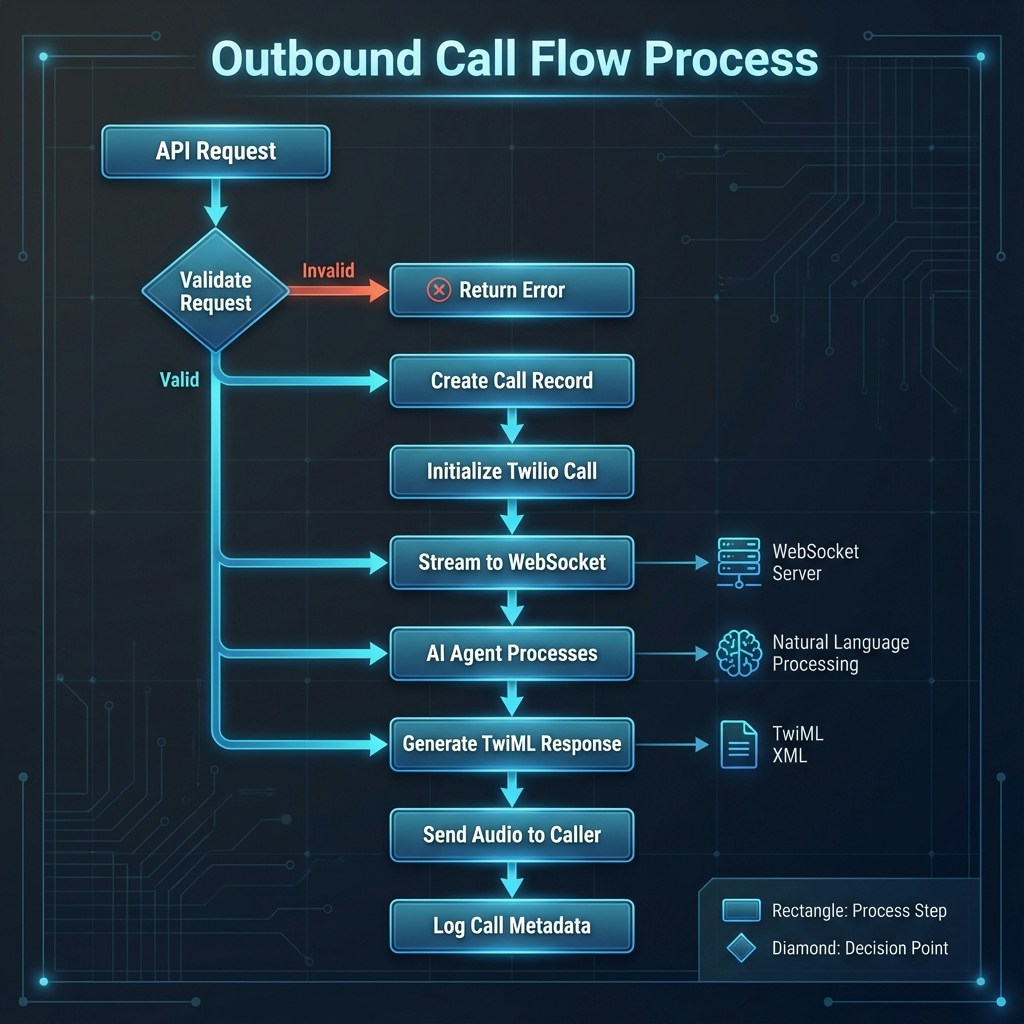
**Call Flow:**
1. Create call request
2. Initialize call connection
3. Stream audio to AI agent
4. Process agent responses
5. Return audio to caller
6. Log call metadata
### 3. Organization Service (`Service/OrganizationService.py`)
**Responsibilities:**
* Manage multi-tenant organizations
* Handle credentials per organization
* Manage API keys and authentication
* Organization billing and usage
**Features:**
* Organization creation
* Member management
* API key generation
* Usage tracking
### 4. Scheduler Service (`scheduler/scheduler.py`)
**Responsibilities:**
* Schedule calls at specific times
* Manage recurring call patterns
* Trigger batch operations
* Handle call execution
**Implementation:**
* Uses APScheduler for scheduling
* Stores schedule in Supabase
* Supports cron expressions
### 5. Batch Call Service (`Service/BatchCallService.py`)
**Responsibilities:**
* Process multiple calls in bulk
* Handle CSV upload and parsing
* Manage batch execution progress
* Generate batch reports
**Workflow:**
1. Upload call list (CSV/JSON)
2. Validate phone numbers
3. Schedule calls
4. Monitor progress
5. Generate results report
## AI Bridges
AI bridges abstract the different AI provider APIs into a common interface.
### Supported Providers
| Provider | Module | Features |
| ----------- | ------------------------------- | -------------------------------- |
| **Gemini** | `bridges/gemini_bridge_base.py` | Real-time streaming, multi-modal |
| **OpenAI** | `bridges/open_ai.py` | GPT-4, function calling, vision |
| **Hume AI** | `bridges/hume_bridge.py` | Emotional intelligence, empathy |
### Bridge Interface
```python theme={null}
class AIBridge:
async def process_message(self, message: str, context: ConversationContext) -> str
async def stream_response(self, message: str) -> AsyncIterator[str]
def set_system_prompt(self, prompt: str) -> None
async def execute_tool(self, tool_name: str, args: dict) -> Any
```
## Communication Layer
### Telephony Providers
**Twilio:**
* Incoming call handling via webhooks
* TwiML response generation
* Real-time media streaming
* Call recording
**Plivo:**
* Similar to Twilio
* Alternative provider for redundancy
* REST API for outbound calls
### LiveKit Integration
For real-time communication:
* WebRTC media streaming
* Low-latency audio processing
* Video support
* Room-based communication
## MCP Integration Layer
Model Context Protocol services enable integration with external platforms:
### Service Architecture
```
MCP Client (in AgentService)
│
└─► MCP Server Process
│
├─► Tool: send_email
├─► Tool: read_email
├─► Tool: send_message
└─► Tool: read_message
```
### Supported Integrations
| Service | Port | Tools |
| -------- | ---- | ---------------------------- |
| Telegram | 8100 | send\_message, read\_message |
| Gmail | 8101 | send\_email, read\_email |
| WhatsApp | 8102 | send\_message, read\_message |
## Data Layer
### Supabase Database Schema
```sql theme={null}
-- Organizations
CREATE TABLE organizations (
id UUID PRIMARY KEY,
name TEXT NOT NULL,
created_at TIMESTAMP,
updated_at TIMESTAMP
);
-- Agents
CREATE TABLE agents (
id UUID PRIMARY KEY,
organization_id UUID REFERENCES organizations,
name TEXT NOT NULL,
ai_provider TEXT,
system_prompt TEXT,
created_at TIMESTAMP
);
-- Calls
CREATE TABLE calls (
id UUID PRIMARY KEY,
agent_id UUID REFERENCES agents,
from_phone TEXT,
to_phone TEXT,
status TEXT,
duration INTEGER,
recording_url TEXT,
created_at TIMESTAMP
);
-- Scheduled Calls
CREATE TABLE scheduled_calls (
id UUID PRIMARY KEY,
agent_id UUID REFERENCES agents,
phone_number TEXT,
scheduled_time TIMESTAMP,
status TEXT,
cron_expression TEXT
);
-- Batch Calls
CREATE TABLE batch_calls (
id UUID PRIMARY KEY,
organization_id UUID REFERENCES organizations,
file_url TEXT,
status TEXT,
total_calls INTEGER,
completed_calls INTEGER,
created_at TIMESTAMP
);
```
## Request Flow Examples
### Outbound Call Flow
 ### Incoming WebSocket Stream
```
1. Client establishes WebSocket connection
2. Audio frames received in real-time
3. Frames sent to AI provider
4. Response streamed back to client
5. Text-to-speech conversion
6. Audio sent to phone
```
## Scaling Considerations
### Horizontal Scaling
* Stateless API servers (multiple instances)
* Load balancer (nginx, AWS ALB)
* Shared database (Supabase)
* Message queue for async tasks (optional: Redis/RabbitMQ)
### Vertical Scaling
* Increase server resources (CPU, memory)
* Database connection pooling
* Caching layer (Redis)
* CDN for media files
## Security Architecture
### Authentication
```
API Request
│
├─► Header: Authorization: Bearer
│
├─► Verify Token (Supabase JWT)
│
└─► Extract User & Organization
```
### Data Protection
* Encryption at rest (Supabase)
* TLS/SSL for transport
* API key rotation
* Audit logging
## Technology Stack
| Layer | Technologies |
| -------------------- | -------------------------- |
| **API Framework** | FastAPI, Uvicorn, Pydantic |
| **Real-time** | WebSocket, LiveKit |
| **AI/LLM** | Gemini, OpenAI, Hume |
| **Telephony** | Twilio, Plivo, Silero VAD |
| **Integrations** | MCP, Telethon, OAuth2 |
| **Database** | PostgreSQL (via Supabase) |
| **Deployment** | Docker, Docker Compose |
| **Task Scheduling** | APScheduler |
| **Async Processing** | asyncio, aiohttp |
## Next Steps
Learn how to create and configure AI agents.
Understand call routing and handling.
Explore available services.
Integrate external platforms.
### Incoming WebSocket Stream
```
1. Client establishes WebSocket connection
2. Audio frames received in real-time
3. Frames sent to AI provider
4. Response streamed back to client
5. Text-to-speech conversion
6. Audio sent to phone
```
## Scaling Considerations
### Horizontal Scaling
* Stateless API servers (multiple instances)
* Load balancer (nginx, AWS ALB)
* Shared database (Supabase)
* Message queue for async tasks (optional: Redis/RabbitMQ)
### Vertical Scaling
* Increase server resources (CPU, memory)
* Database connection pooling
* Caching layer (Redis)
* CDN for media files
## Security Architecture
### Authentication
```
API Request
│
├─► Header: Authorization: Bearer
│
├─► Verify Token (Supabase JWT)
│
└─► Extract User & Organization
```
### Data Protection
* Encryption at rest (Supabase)
* TLS/SSL for transport
* API key rotation
* Audit logging
## Technology Stack
| Layer | Technologies |
| -------------------- | -------------------------- |
| **API Framework** | FastAPI, Uvicorn, Pydantic |
| **Real-time** | WebSocket, LiveKit |
| **AI/LLM** | Gemini, OpenAI, Hume |
| **Telephony** | Twilio, Plivo, Silero VAD |
| **Integrations** | MCP, Telethon, OAuth2 |
| **Database** | PostgreSQL (via Supabase) |
| **Deployment** | Docker, Docker Compose |
| **Task Scheduling** | APScheduler |
| **Async Processing** | asyncio, aiohttp |
## Next Steps
Learn how to create and configure AI agents.
Understand call routing and handling.
Explore available services.
Integrate external platforms.